Is Your Pool Losing Water? 5 Signs You May Have a Leak
Some water loss is normal. Ongoing loss is not.
- Water loss beyond evaporation
Most pools lose up to 2 inches per week in hot weather.Losing more than 3/8 inch per day points to a leak. - Wet soil or soggy grass
Soft ground near the pool or equipment pad often means an underground line is leaking. - Higher water or chemical use
Refilling the pool often makes chemicals harder to hold.This raises monthly costs. - Cracks or debris inside the pool
Loose tile, plaster cracks, dirt, or rocks on the floor can mean water is pulling soil into the pool shell. - Unstable water chemistry
Algae growth or fast chlorine loss can be caused by frequent dilution from refilling.
DIY Tests You Can Do Before Calling for Service
They do not replace professional detection.
The Bucket Test
Place a bucket on the top step. Fill it so the water inside matches the pool level. Mark both water lines. After 24 hours, compare the drop. If the pool drops more than the bucket, a leak is likely.
The Dye Test
Turn off the pump. Use pool-safe dye near cracks, lights, or fittings. If the dye pulls inward, water is escaping at that point. If these tests suggest a leak, detection is the next step.
Professional Pool Leak Detection Methods
Some leaks cannot be seen. Many occur underground or inside plumbing. Our detection process may include:
Electronic listening equipment
This helps locate underground water movement in pressurized lines.
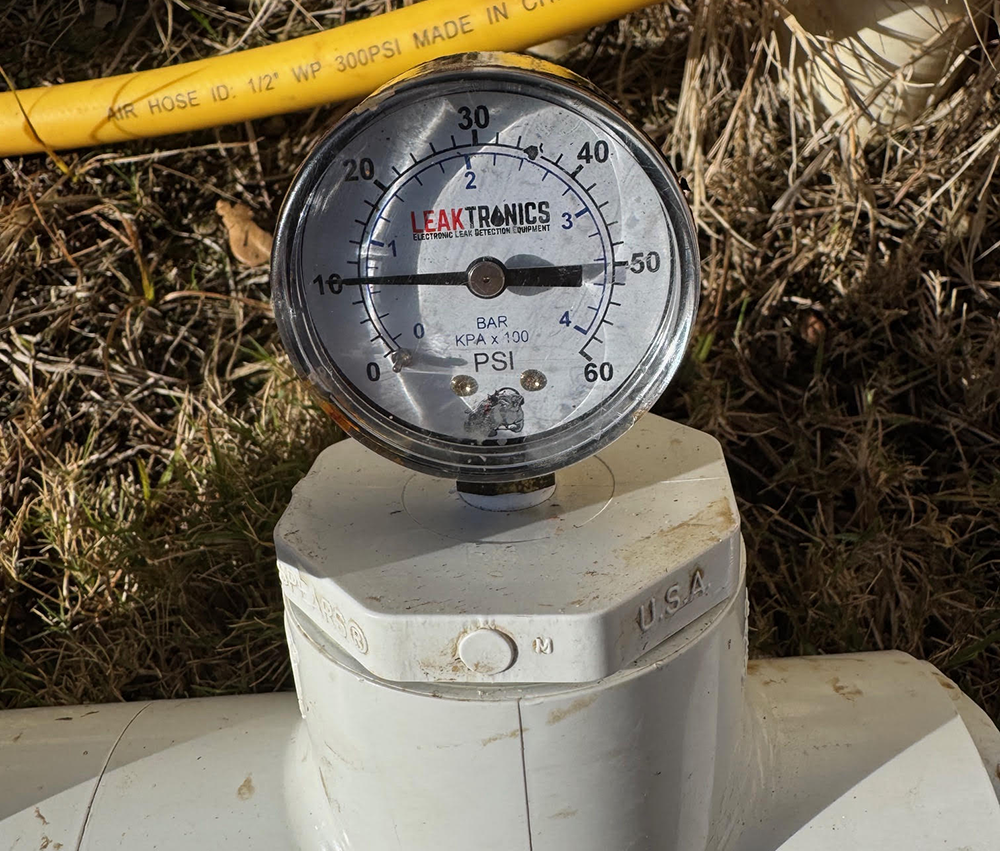
Pressure testing
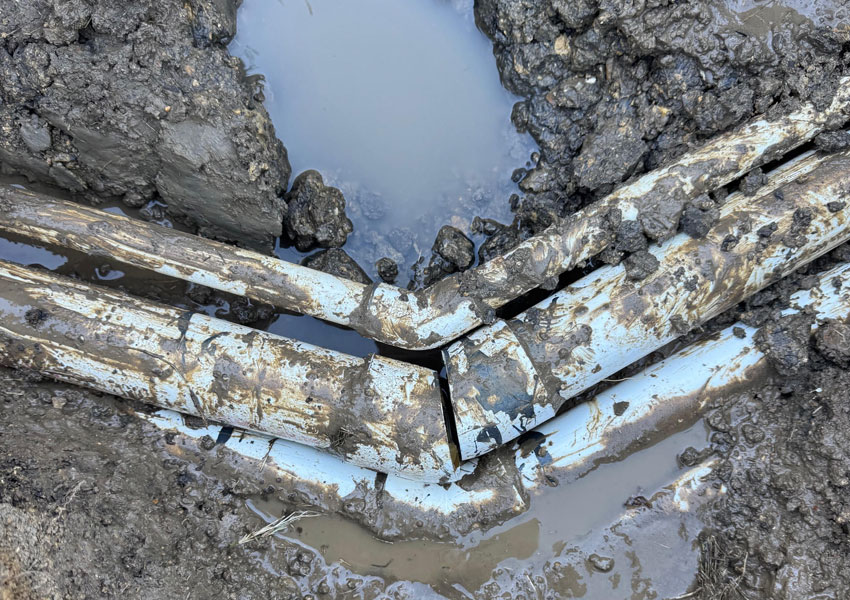
Individual plumbing lines are isolated and tested for loss. This shows which line is leaking.
Structural inspections
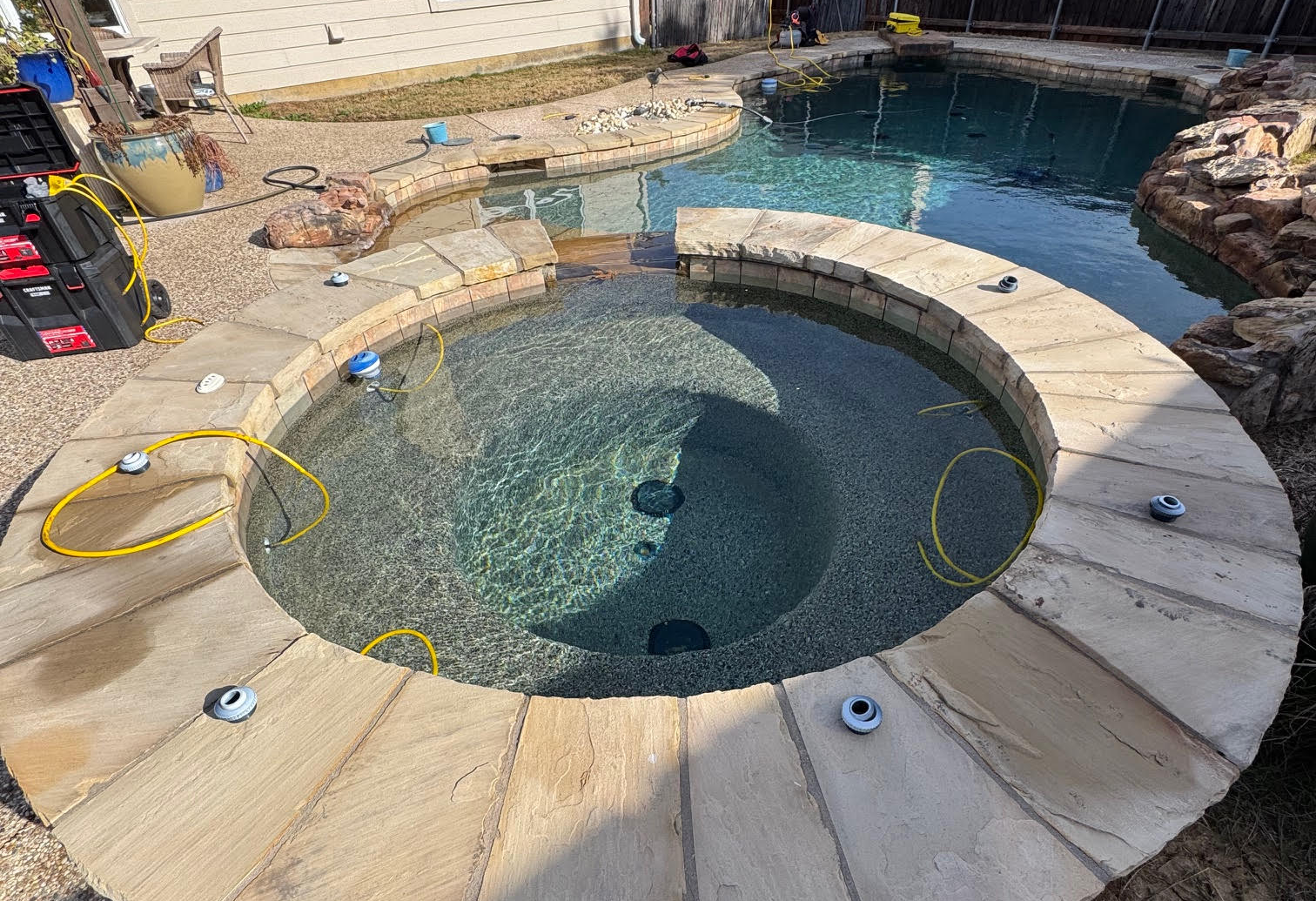
We check skimmers, lights, returns, drains, and spa features where leaks often occur. Detection focuses on accuracy, not guesswork.
Our Pool Leak Detection and Repair Process
Leaks cause stress because the problem feels unknown. We follow a clear process.
Step 1: Phone review
We rule out common causes like leaking valves or autofill issues.
Step 2: On-site detection
A flat-rate visit is used to locate the source of water loss.
Step 3: Written findings
You receive a clear explanation of what failed and where.
Step 4: Repair options
We explain repair methods and cost before work begins.
Step 5: Verification
Repairs are tested to confirm the leak is resolved.
Why Pool Leak Repairs Should Not Be Delayed
Leaks do not stay small. Water loss can wash away soil under the pool shell.
Plumbing lines can shift or collapse. Pumps and heaters can run dry and fail early.
Fixing a leak early costs less than repairing structural damage later.
Pool Leak Detection Across Dallas–Fort Worth
We provide leak detection services throughout the metroplex, including:
Dallas, Fort Worth, Plano, Frisco, McKinney, University Park, Lake Highlands, and Preston Hollow.
Any electrical-related pool work is handled in compliance with Texas licensing rules.
Schedule Pool Leak Detection
If your pool is losing water, do not wait. Leaks cause damage you cannot see.
Call WaterTex Pools to schedule professional pool leak detection in Dallas–Fort Worth.
Clear findings. Straight answers. Verified repairs.