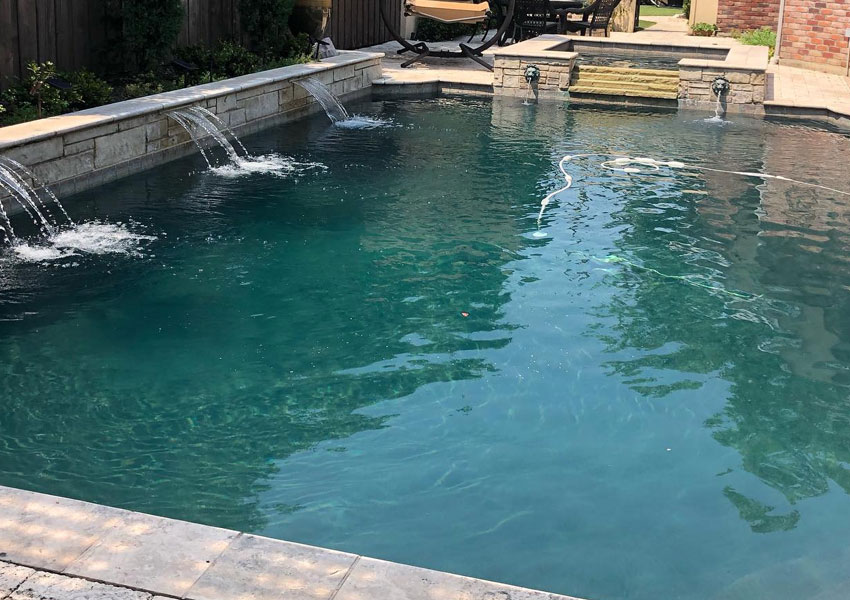
Pool resurfacing replaces the worn top layer of your pool interior. It restores a smooth surface and a clean look.
WaterTex Pools provides pool resurfacing and pool replastering across Dallas–Fort Worth. We have 25 years of experience serving DFW pool owners.
We provide on-site estimates so you get real pricing based on your pool.
Why Pool Resurfacing Matters
A worn pool surface is not just cosmetic. It can become a safety and maintenance issue.
Safety and comfort Rough plaster can scrape feet and hands. Cracks can worsen and lead to water loss.
Appearance Resurfacing removes stains, blotches, and worn areas that will not clean off.
Better pool performance A damaged surface holds dirt and algae more easily. A fresh surface is easier to brush and keep clean.
Protects the pool shell Plaster is a protective layer. If it fails, water can reach the gunite and cause bigger repairs later.
Signs Your Pool Needs Resurfacing
Most pools show warning signs before the finish fails completely. If you see these issues, resurfacing should be considered.
Peeling or flaking plaster
Rough or sharp areas on walls, steps, or floor
Stains that will not come off with normal cleaning
Cracks in plaster or cracks that keep returning
Hollow spots when the pool is drained and you tap the surface
Old finish that is 10–15+ years old
Water chemistry that will not stay balanced
Chalky residue that keeps forming at the waterline
If your pool is losing water, leak detection may be needed first.
Pool Finish Options We Install
Finish choice affects lifespan, texture, and cost. We help you choose based on how you use the pool and your budget.
Plaster Pool Finish
Plaster is the most common finish. It gives a smooth, classic look.
Smooth feel underfoot
Light blue water color with clean water
Typical lifespan: 7–12 years with proper care
Common DFW range: $4,000–$7,000 for many pools
Heat, sun, and water chemistry can shorten plaster life in Texas. Good brushing and balanced water helps it last.
Quartz Aggregate Finish
Quartz finishes use plaster mixed with quartz crystals. They hold up better than standard plaster.
Better stain resistance than plaster
More color options
Typical lifespan: 12–15 years
Common DFW range: $5,000–$10,000
Quartz finishes are a solid choice when you want longer life without pebble texture.
Pebble Finishes
Pebble finishes use small stones in cement. They are durable and handle Texas conditions well.
Long lifespan: 15–25 years with proper care
Strong resistance to staining and wear
Natural slip resistance
Many color blends available
Common DFW range: $7,000–$15,000
Some pebble finishes feel more textured than plaster. Smoother pebble blends are available depending on the product chosen.
Tile Pool Finish
Tile finishes are a premium option. They can last a long time when installed correctly.
High-end look
Long lifespan: 20+ years in many cases
Common DFW range: $8,000–$30,000+ depending on design
Tile is often used for waterline tile even when the interior finish is plaster, quartz, or pebble
Pool Resurfacing Cost in Dallas–Fort Worth
Resurfacing cost depends on your pool and the finish you choose. No two pools price out the same.
Main factors that change cost:
Pool size and surface area
Finish type (plaster, quartz, pebble, tile)
Current condition (cracks, hollow spots, bond issues)
Steps, benches, spas, and tight curves
Access for crews and material staging
Typical price ranges often fall in these bands:
Plaster: $4,000–$7,000 for many pools
Quartz: $5,000–$10,000
Pebble: $7,000–$15,000
Tile: $8,000–$30,000+
Other work that may be done while the pool is drained:
Waterline tile replacement
Coping or mastic repairs
Light niche repairs
Equipment repairs at the pad
An on-site estimate is the only way to price accurately.
Our Pool Resurfacing Process
Resurfacing is only as good as the prep work. We follow a clear process so the finish bonds correctly.
Step 1: Inspection and estimate We check the surface condition and damage areas. We review finish choices and provide a written estimate.
Step 2: Drain and protect the jobsite The pool is drained. Deck and landscape areas are protected as needed.
Step 3: Surface preparation Old surface issues are removed and cleaned. Hollow spots are chipped out. Cracks are repaired before the new finish goes on.
Step 4: Apply the new finish A bond coat is applied when required. The finish is installed and hand-troweled.
Step 5: Fill and start-up The pool is refilled without stopping the fill. Water is balanced during start-up. You get care instructions, including brushing needs during cure.
Most resurfacing projects are completed in about 5–10 days, depending on scope and weather.
Request a Pool Resurfacing Estimate
If your pool surface is rough, peeling, or badly stained, resurfacing may be the right fix. Waiting often leads to bigger repairs and higher cost.
Contact WaterTex Pools for a pool resurfacing estimate in Dallas–Fort Worth.
We will inspect the surface, explain options, and give clear pricing.
Pool Resurfacing FAQs
How often does a pool need resurfacing?
Many pools need resurfacing every 10–15 years.
Plaster may need attention sooner. Pebble can last longer with proper care.

How long does pool resurfacing take?
Many jobs take 5–10 days from drain to fill, depending on scope and weather.
Can I resurface my pool myself?
No. Resurfacing involves specialized tools, surface prep, and materials.
DIY attempts often fail early and can void warranties.
What time of year is best in DFW to resurface pool?
Resurfacing can be done year-round.
Warm weather can help cure times, but scheduling and scope matter more.
Is there a warranty if I resurface my pool?
Warranty depends on the finish type and scope.
Warranty details are provided in writing with the estimate.
Is pool resurfacing the same as replastering?
Replastering refers to a plaster finish.
Resurfacing includes plaster, quartz, pebble, and tile finishes.
Can you resurface only part of a pool?
Spot repairs are possible in some cases.
Color and texture may not match, so full resurfacing gives the cleanest result.